(267) 778-9143
Blog
Publication date: May 12, 2026
Arthritis affects more than 58 million adults in the United States, with seniors making up most of that group. Many older adults instinctively rest and avoid movement when joints hurt. But research shows regular, gentle movement is one of the most effective tools for managing arthritis symptoms long term.
This guide covers the safest and most practical arthritis exercises for seniors, organized by type, intensity, and physical ability — so that every senior can find an approach that works for their body.
Exercise does not wear down arthritic joints. Controlled movement lubricates joint tissue, strengthens muscles supporting those joints, and reduces inflammation that causes arthritis pain. According to the Arthritis Foundation, physical activity is the most effective non-drug treatment for arthritis pain.
Beyond pain relief, exercise for seniors with arthritis supports better sleep, improved mood, and lowers fall risk. For seniors receiving in-home support, regular activity can be part of a care plan that maintains physical function and overall well-being.
Arthritis is not a single disease — it is an umbrella term for more than 100 conditions that cause joint inflammation, stiffness, and deterioration. The two most common types in older adults are osteoarthritis, which results from cartilage breakdown between bones, and rheumatoid arthritis, an autoimmune condition that attacks the joint lining.
In both cases, affected joints lose smooth range of motion. Surrounding muscles often weaken from disuse, placing more stress on the joint. Understanding these mechanics matters because it shapes which exercises help and which to avoid. If you are navigating care decisions for an older adult with arthritis or related challenges, this overview of home care eligibility and services in Philadelphia offers useful context.
When a joint stays still for extended periods, synovial fluid — the natural lubricant inside each joint — stops circulating effectively. Morning stiffness that many arthritis sufferers experience is largely the result of this inactivity overnight. Even five to ten minutes of gentle movement in the morning can noticeably reduce joint stiffness throughout the day.
Low-impact movement also stimulates endorphin production, the body’s natural pain-moderating chemicals. The result is a physical and psychological shift: reduced discomfort and a better sense of control over symptoms.
Before starting any new exercise routine, seniors with arthritis should consult their primary care physician or physical therapist. This is especially important for those managing multiple health conditions or recent joint surgery.
A few universal principles apply regardless of fitness level:
Low-impact exercise keeps joints moving without placing damaging stress on cartilage or connective tissue. These are the most widely recommended forms of activity for older adults managing arthritis.
Walking is the most accessible exercise for most seniors. It strengthens muscles around the knee and hip joints, supports cardiovascular health, and requires no equipment. Even a 20-minute walk at a comfortable pace, three to five times per week, can measurably reduce arthritis pain over time.
For seniors with balance concerns, walking poles or a cane provide added stability. Walking on softer surfaces like grass or a track rather than concrete reduces joint impact without limiting benefits.
Water-based exercise suits seniors with arthritis because buoyancy greatly reduces joint weight. In waist-deep water, the body bears about 50% of its weight, and in chest-deep water, roughly 25%. This lets seniors move through a fuller range of motion than on land, with less discomfort.
Swimming laps, water walking, and structured water aerobics classes all qualify. Many community centers and YMCAs offer arthritis-specific aquatic programs designed for older adults.
Cycling, whether on a standard bike outdoors or a stationary bike indoors, is excellent for knee and hip arthritis. The circular pedaling keeps joints lubricated without the jarring impact of running or jumping. Stationary bikes are practical for seniors because there is no balance risk, and resistance can be precisely controlled.
Sessions of 15 to 30 minutes at low to moderate resistance, three times per week, are a realistic and effective start for most seniors.
Stretching exercises for seniors with arthritis address one of the most common and frustrating symptoms: reduced range of motion. When joints stiffen, everyday tasks — reaching overhead, bending to tie shoes, turning to look over a shoulder — become effortful and sometimes painful.
A basic daily stretching routine targeting the major joint groups can restore and preserve flexibility over time:
| Stretch | Target Area | How to Perform |
| Neck side tilt | Cervical spine | Slowly tilt the ear toward the shoulder, hold 15 seconds on each side |
| Shoulder cross-body stretch | Shoulder joint | Pull one arm gently across the chest, hold for 20 seconds |
| Wrist circles | Wrist joints | Rotate wrists slowly in both directions, 10 reps |
| Seated hamstring stretch | Knee and hip | Extend one leg, reach toward toes, hold 20 seconds |
| Ankle alphabet | Ankle joint | Trace letters A–Z with the foot to mobilize the joint |
| Hip flexor stretch | Hip joint | Step forward into a lunge, hold for 20–30 seconds |
Hold each stretch to the point of mild tension — never pain — and breathe steadily throughout. Avoid bouncing or forcing a joint past its comfortable range.
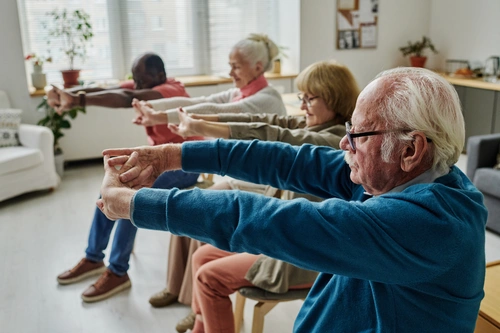
For seniors who find standing exercises difficult, chair exercises for seniors with arthritis provide a safe and effective alternative. A sturdy, armless chair is all the equipment needed.
Effective seated exercises include:
These movements can be done in any sequence and adapted based on which joints are most affected that day. Even 10 minutes of chair-based movement daily contributes meaningfully to maintaining strength and flexibility.
Yoga and Tai Chi are both supported by strong clinical evidence for arthritis management in older adults. A review published by the National Center for Complementary and Integrative Health found that Tai Chi reduces pain and stiffness in people with knee osteoarthritis and improves physical function and balance.
Chair yoga adapts traditional yoga poses for seniors who cannot easily get up and down from the floor. It combines gentle stretching with controlled breathing — a combination that reduces both physical tension and the psychological stress that can amplify pain perception.
Tai Chi’s slow, flowing movements train balance and coordination alongside flexibility. Many community centers and senior living facilities offer beginner-level Tai Chi classes specifically designed for adults with limited mobility or chronic joint conditions.
Consistency is the biggest predictor of whether exercise will help manage arthritis long term. Yet many seniors start too enthusiastically, experience a flare-up, and abandon the routine. A smarter approach builds slowly and protects against overexertion.
Practical strategies for staying consistent:
Having a companion or caregiver by your side can make a meaningful difference. Inspire Home Care’s companion care services are specifically designed to provide seniors with a supportive, consistent presence — including encouragement for daily routines like exercise.
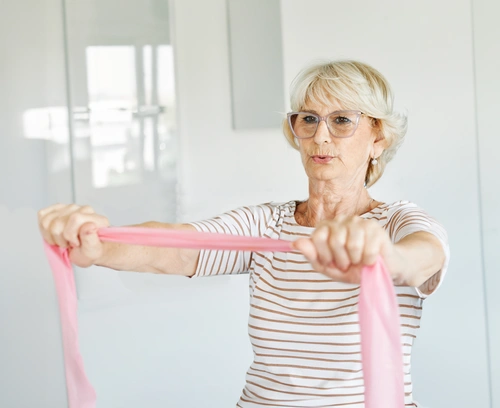
Exercise works best when supported by broader lifestyle habits that reduce inflammation and protect joint health.
| Habit | Benefit for Arthritis |
| Anti-inflammatory diet (fish, leafy greens, olive oil) | Reduces systemic inflammation that worsens joint pain |
| Adequate sleep (7–9 hours) | Supports tissue repair and pain regulation |
| Healthy body weight | Reduces load on weight-bearing joints (knee, hip, spine) |
| Stress management (meditation, deep breathing) | Lowers cortisol, which can aggravate inflammation |
| Regular hydration | Supports synovial fluid production and muscle function |
Weight management deserves particular attention. Each pound of excess body weight places approximately four pounds of additional pressure on knee joints during walking. For seniors already managing knee or hip arthritis, even a modest weight reduction can noticeably reduce daily pain levels.
Not every day will be a good exercise day, and knowing when to hold back is as important as knowing how to push forward.
Stop exercising and consult a healthcare provider if you experience:
Mild muscle soreness after exercise — the kind that fades within 24 hours — is normal and expected, especially when starting a new routine. The goal is to find the level of activity that challenges the body gently without triggering a flare.
What are the best exercises for seniors with arthritis?
Low-impact activities like walking, swimming, water aerobics, cycling, and Tai Chi are consistently recommended as the best exercises for seniors with arthritis. They keep joints mobile without placing excessive stress on cartilage or connective tissue.
Is it safe to exercise during an arthritis flare-up?
During an active flare — when joints are swollen, hot, or acutely painful — it is best to rest the affected joint. Gentle range-of-motion movements and stretching of unaffected areas are usually still appropriate. Resume full activity once the flare subsides.
How often should seniors with arthritis exercise?
Most guidelines, including those from the CDC, recommend at least 150 minutes of moderate-intensity activity per week for adults with arthritis — broken into manageable 20–30-minute sessions, five days a week.
Can exercise make arthritis worse?
When done correctly, exercise does not accelerate joint damage. The key is to choose low-impact activities, progress gradually, and listen to the body’s signals. Avoiding exercise altogether, by contrast, leads to muscle loss and increased joint instability — which worsens arthritis outcomes over time.
Do I need special equipment to exercise with arthritis?
Most arthritis-friendly exercises require little or no equipment. A sturdy chair, comfortable footwear, and a non-slip mat for floor stretches cover the basics. Resistance bands and light hand weights can be added gradually as strength improves, but they are not necessary to begin.

Inspiring you to live independently